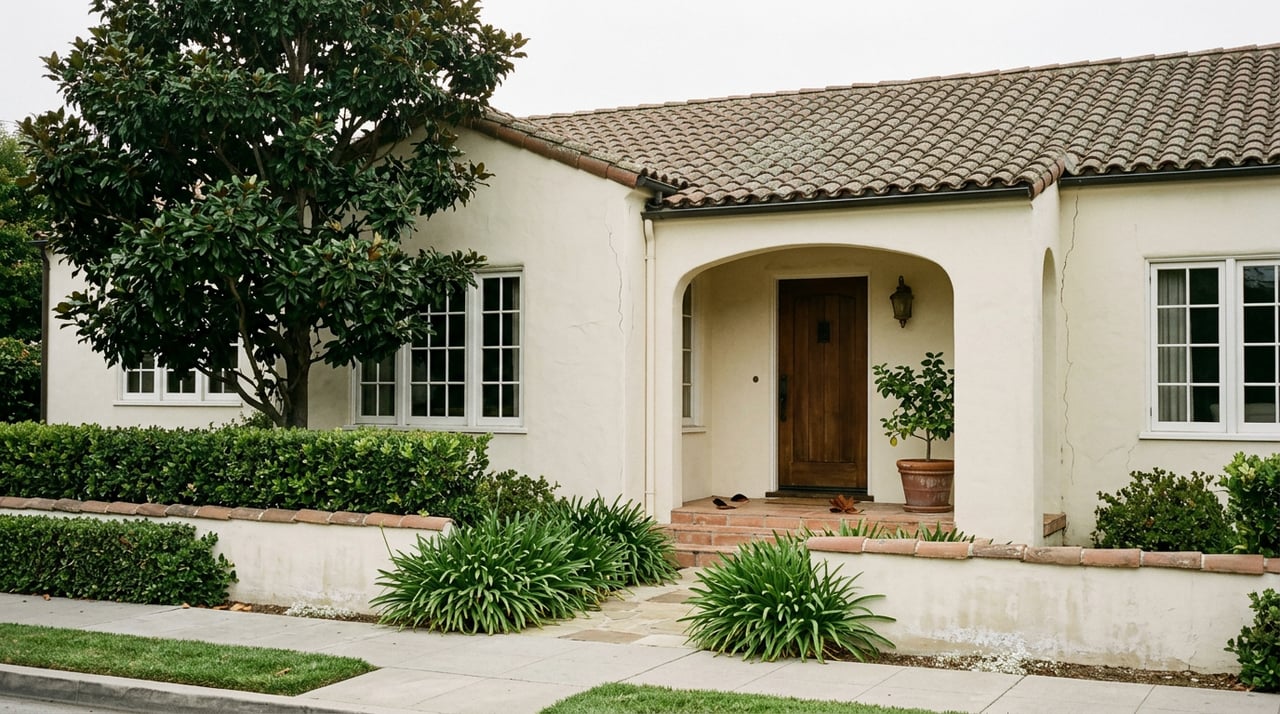
A homeowner in the Village lists a 1949 bungalow this fall and calls a contractor about swapping the porch railing before the first open house. For years, that phone call would have triggered a real question: is this house old enough that the city needs to weigh in before anything visible from the street gets touched. The answer used to be automatic. Any home 75 years or older in Coronado had to go through an individual historic review before an owner could demolish or remove original features facing the right of way, no matter how modest the change.
That automatic trigger is gone for most of the Village. Amendments to Coronado's Historic Resource Code took effect on December 4, 2025, and they rest on a citywide survey that sorted nearly every pre-1970 structure in the Village into one of three tiers. The practical result, according to reporting from the Coronado Times as the ordinance moved forward last November, is that roughly 1,058 homes were lifted out of mandatory historic review entirely. If you own or are about to list a home built before 1970 in the Village, that number either applies to you or it doesn't, and knowing which side of the line you're on now matters more than knowing your home's age.
The Review Process That Got Too Expensive To Run On Every Old House
The old rule sounds simple: turn 75, get reviewed. In practice it became a slow, case by case burden on both homeowners and the city. Between 2019 and 2023, the city put 122 properties through individual historic assessments at a combined cost of roughly $863,000, north of $7,000 per review on average. Every year, more Village homes crossed the 75-year threshold, because the post-World War II building boom in Coronado ran hot. Homes built between 1941 and 1961 went up at an average of 48 a year, well above the 26 to 29 a year built in the decades before. The backlog was only going to grow.
The city hired Dudek, an Encinitas-based planning firm, to walk the Village and evaluate every structure built through 1970 against Coronado's architectural significance criterion. That fieldwork happened in 2021, and the resulting matrix went to the City Council in 2023.
Three Tiers, Three Different Outcomes For A Seller
The survey didn't rate homes as historic or not historic. It rated them by how much of their original architectural character survives.
| Tier | What it means | 2023 count |
|---|---|---|
| Tier 1 | Unaltered or minimally altered, potentially eligible for designation | 201 properties |
| Tier 2 | Recognizable style but altered enough to likely miss designation | 145 properties |
| Tier 3 | Substantially altered, little chance of meeting the architectural criterion | 1,698 properties |
Tier 3 is where most Village homes landed, and it's also the category the city chose to exempt from mandatory review. If your home sits in Tier 3, you can remove or modify original street-facing features without first going through a Determination of Historic Significance Review, though you can still request one voluntarily if you want to pursue designation for other reasons.
If your home landed in Tier 1 or Tier 2, the old process still applies to any project involving demolition or removal of original features visible from the street. That's not a small distinction for someone planning to update a facade before listing, or for a buyer who's already picturing a remodel.
The Reaction This Wasn't Universal Support
Not everyone welcomed the tiering as a clean fix. The Coronado Historical Association pushed back on treating the survey as a final answer rather than a starting point. Executive director Christine Stokes put it this way in comments reported by Coronado News:
a helpful tool for discovery, not a final document that dictates a property's historic status.
Her concern was that the survey only measures architecture. It doesn't capture the people, events, or cultural history that can also qualify a home for designation under Coronado's other criteria. A Tier 3 rating means a home probably won't qualify on architectural grounds alone, but it says nothing about whether a notable builder, a significant event, or a locally important resident once lived there. That distinction matters for the smaller group of owners who might actually want designation rather than avoid it, which brings up the part of this story most sellers skip past.
The Twist: Historic Status Can Cut Your Tax Bill, Not Just Complicate Your Remodel
Most homeowners hear "historic designation" and think permit friction. In Coronado, it's also a Mills Act contract, and that's a financial tool, not just a preservation label.
Under a Coronado City Council resolution, an owner of a designated Historic Resource can see a property tax reduction of up to 50 percent, applied through the county assessor using an income-based valuation formula rather than comparable sales. Countywide, a snapshot of assessor data reported by Hoodline in March 2026 put total Mills Act savings across San Diego County at roughly $29 million, with Coronado alone home to around 200 properties under contract. Crown Manor, the 1902 landmark at 1015 Ocean Blvd., is one of the names on that list, a reminder that Mills Act designation in Coronado isn't a rare curiosity but an active, recognizable part of the local market.
The detail that changes how a seller should think about this: the Mills Act benefit runs with the land. Once a contract is recorded, it transfers automatically to the next owner when the property sells. A designated home with an active Mills Act agreement isn't carrying a burden into a sale, it's carrying a tax break the buyer inherits on day one. That's a real selling point in a market where a Village home now trades in the low millions, and it flips the usual assumption that "historic" and "harder to sell" go together.
What This Actually Means If You're Listing A Pre-1970 Village Home
Before you schedule a pre-listing renovation or price a Village home built before 1970, a few concrete steps matter more than they used to:
- Look up your address on the city's Historic Preservation interactive map to see whether you're Tier 1, Tier 2, or Tier 3, before you plan any exterior work.
- Confirm your actual build date using the original building permit or the Residential Building Record on file with the city. Survey age brackets were based on Village construction through 1970, and county records have occasionally shown inaccurate build years that the city's own staff had to cross-check against permits and Sanborn maps during the survey.
- If your home is Tier 1 or Tier 2 and you're planning to remove or alter original street-facing features, budget time for a Determination of Historic Significance Review before demolition, and expect a Historic Resource Alteration Permit process if the home later becomes designated.
- If your home could plausibly qualify for designation, weigh applying for a Mills Act agreement before you list rather than leaving it for the next owner to pursue. A recorded contract at the time of sale is a tangible number a buyer can see, not a hypothetical.
- Remember that Tier 3 status doesn't close the door on designation. Any owner can still apply on non-architectural criteria at their own discretion.
Quick FAQ
Does a Tier 3 rating mean my home can never be considered historic? No. Tier 3 reflects a low likelihood of qualifying under the architectural criterion specifically. An owner can still apply for designation under any of the city's other criteria if they choose to.
Do I have to disclose my tier status when I sell? The tier isn't a legal disclosure item, but it's public information on the city's own map. A buyer researching a pre-1970 Village address can find it in minutes, so knowing your own status before they do is simply good practice.
My home was built after 1970. Does any of this apply to me? No. The Historic Resources Inventory only evaluated Village structures built through 1970.
If I want a Mills Act agreement, do I need to apply before selling, or can a buyer do it after closing? The application process is open to any qualifying owner, current or future. The difference is that a contract already recorded at the time of sale is a benefit the buyer inherits immediately, while an application filed after closing means the new owner starts the process from scratch.
Coronado's Village housing stock is old enough that this update touches a real share of what's on the market this year. Knowing your tier, your build date, and whether a Mills Act conversation makes sense isn't paperwork for its own sake, it's the difference between guessing at your home's status and walking into a listing appointment with the answer already in hand. If you're weighing a sale or a renovation on a pre-1970 Village property, the Leo Gonzalez Team can help you check your tier, pull your permit history, and figure out whether historic designation belongs in your pricing strategy. Schedule your white-glove consultation and bring your address.
