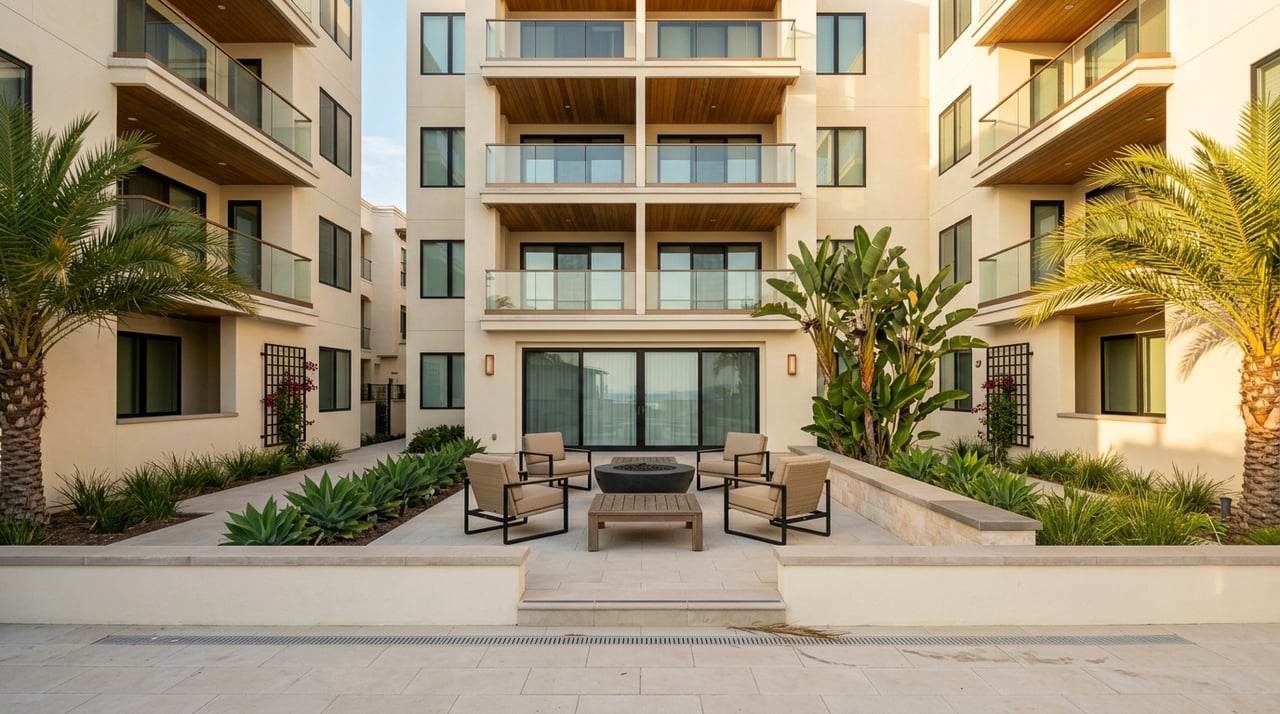
Dreaming about a condo near the sand in Imperial Beach? It can be a smart way to enjoy coastal living at a lower entry point than many detached homes, but it also comes with tradeoffs that matter. If you are comparing buildings, HOA dues, and ocean-close locations, this guide will help you understand what condo ownership really means here and what to review before you buy. Let’s dive in.
Why Imperial Beach Condos Stand Out
Imperial Beach offers a coastal lifestyle that appeals to buyers who want beach access, lower-maintenance living, and a price point that may feel more reachable than other coastal parts of San Diego County. Census QuickFacts reports a median owner-occupied home value of $811,000 in Imperial Beach for 2019 through 2023, along with a median gross rent of $1,914.
That said, this is not a one-size-fits-all condo market. Imperial Beach includes smaller ocean-adjacent buildings, larger low-rise communities, and mid-rise projects with different amenities, dues, and governance structures. As a buyer, you need to compare each community on its own terms.
What Condo Ownership Means
In California, a condo is a legal form of ownership, not just a building type. The California Department of Real Estate explains that condo owners own a separate interest plus an undivided interest in the common area.
That matters because listing terms like “townhome,” “mid-rise,” or “low-rise” do not always tell you the legal ownership structure. A townhome may describe how a property looks, but it does not automatically explain what you own or what the HOA maintains.
Who Maintains What
California law sets a basic framework for condo maintenance responsibilities. In general, the HOA maintains, repairs, and replaces the common area, while you are responsible for your separate interest.
Exclusive-use common areas can get more nuanced. Areas like balconies, patios, driveways, and some parking spaces are often maintained by the owner, while repair or replacement may fall to the association unless the governing documents say otherwise. This is one reason your document review matters just as much as the showing.
Imperial Beach Condo Communities Buyers Compare
Imperial Beach condo inventory ranges from compact coastal buildings to larger communities with broader amenity packages. Public HOA and listing information shows everything from 12-unit and 14-unit buildings to 45-unit and 60-unit communities.
On Seacoast Condominiums
On Seacoast Condominiums is a smaller three-story, 14-unit complex across the street from the Pacific Ocean. According to its public site, many units offer peek-a-boo ocean views, and all units have views of the Tijuana River National Estuarine Research Reserve.
For buyers, this is a good example of a more boutique coastal building. Smaller projects can offer a more intimate feel, but they may also have fewer owners sharing future repair costs.
Sea Village Condominiums
Sea Village Condominiums at 1111 Seacoast Drive is a larger low-rise community. Public HOA information lists it as a 60-unit project created in 1979.
A current public listing shows 2-bedroom units with HOA dues around $300 per month. That can sound appealing at first glance, but the smarter question is always what the dues cover and how well the reserves are funded.
Imperial Beach Club
Imperial Beach Club is a mid-rise oceanfront example that many buyers notice when they start searching the area. Public HOA information lists the residential association as a 45-unit, 1992-built, self-managed condo association.
There is also a separate public page for the Imperial Beach Club Master Association. That is an important reminder that some communities may have layered governance, which can mean more than one HOA structure or more than one assessment stream.
Surf and Sand
Surf and Sand Condominium Association at 1460 Seacoast Drive is another smaller coastal building. Public HOA information lists it as a 12-unit building from 1973.
A current public listing at that address shows HOA dues of $435 per month for an oceanfront condo. For a buyer, this shows how even smaller buildings can carry meaningful monthly dues depending on location, building needs, and shared expenses.
What HOA Dues Can Look Like
HOA dues in Imperial Beach can vary a lot. Public listing snapshots show examples ranging from $195 per month at 1450 Iris Avenue to about $300 at Sea Village, $420 at 1274 Holly Avenue, $585 at Sandpiper, and $1,000 at Imperial Beach Club.
That wide range is exactly why you should not judge a condo by dues alone. A lower fee is not always a better value, and a higher fee is not always a red flag if it reflects stronger reserves, more extensive maintenance, or broader coverage.
What HOA Fees May Cover
Different Imperial Beach buildings package expenses differently. Some public listings show dues that include water and trash, while others may include exterior maintenance, limited insurance, roof maintenance, landscaping, or sewer.
This can change your real monthly cost in a big way. If one building has lower dues but covers very little, you may end up carrying more out-of-pocket responsibility than you expected.
Why Insurance Details Matter
The HOA insurance summary is important, but it is not the whole story. California disclosure rules state that the association’s insurance summary is not a substitute for the actual policy, and the master policy may not cover your personal property, improvements, or all deductibles.
That means you should review the insurance summary carefully and understand where the HOA’s policy stops and your own coverage needs begin. In coastal condo ownership, that line matters.
Reserve Funds And Special Assessments
Reserve planning is one of the biggest financial topics for condo buyers. California requires associations to conduct a reserve study at least every three years, review it annually, and prepare a reserve funding plan for major components, useful life, repair costs, and funding needs.
The annual budget report must also disclose whether special assessments are expected, along with the estimated amount, start date, and duration. If reserve funds are not enough for required repairs, the association may borrow and levy an emergency assessment.
For you, the takeaway is simple: monthly dues are only part of the cost picture. You also want to know whether the HOA appears prepared for future repairs.
Rules Shape Daily Living
An HOA does more than collect dues. It can shape parking, guest use, rental rules, noise expectations, and other parts of day-to-day living.
Published rules for Sandpiper, for example, show requirements for parking permits, towing for unauthorized vehicles, and separate permit limits for renters and guests. Even if a rule seems minor on paper, it can affect how comfortable and convenient the property feels once you move in.
Older Coastal Buildings Need Extra Review
Imperial Beach has older coastal condo stock, and that makes building-condition review especially important. California’s balcony and exterior elevated element law requires qualifying condominium buildings to complete inspections, with the first deadline having been January 1, 2025, and follow-up inspections every nine years.
If an inspector identifies an immediate hazard, access must be blocked and the local code enforcement agency must be notified within 15 days. For buyers looking at older buildings with balconies, decks, walkways, or waterproofing systems, the most recent inspection report is a must-read.
Coastal Risks To Understand
The lifestyle appeal of Imperial Beach is real, but so are the coastal risks. The City of Imperial Beach hazard mitigation annex identifies coastal storms, erosion, tsunami risk, flooding, and sea-level rise as major issues.
The annex also notes that risk from surface runoff and coastal flooding is increasing, that tidal inundation already affects stormwater outlets, and that oceanfront properties and beach access points are already in coastal erosion and flood hazard zones associated with a 100-year wave event. If you are buying close to the water, this should be part of your decision-making process.
Beach Conditions Are Not Always Predictable
Beach living in Imperial Beach also comes with water-quality considerations. San Diego County’s Beach and Bay Program says South County beaches are sampled daily because they are disproportionately affected by cross-border sewage flows from Mexico and the Tijuana River Valley.
The county posts advisories, warnings, and closures when bacteria exceed state standards or sewage contamination is present. For buyers seeking a walk-to-the-beach lifestyle, it is worth understanding that beach access and water conditions may not feel the same every day.
Documents To Review Before You Buy
In Imperial Beach, condo shopping should include a serious document review, not just a tour and a quick look at the dues. California resale disclosures require sellers to provide extensive HOA materials before transfer.
Focus on these key items:
- CC&Rs
- HOA rules and regulations
- Annual budget report
- Reserve study and reserve funding plan
- Current regular and special assessments
- Unpaid charges
- Insurance summary
- Rental restrictions
- Requested board minutes from the prior 12 months
- Unresolved violation notices
- Disclosed defect materials
- Approved but not-yet-due assessment changes
- The most recent balcony and exterior elevated element inspection report
- FHA and VA approval status listed in the annual budget materials
If the project has multiple HOA layers, confirm whether you will pay one set of dues or several. That question alone can prevent surprises later.
What To Expect As A Buyer
Buying a condo in Imperial Beach can be a strong fit if you want coastal access and less exterior maintenance than a detached home. It can also be a practical entry point into a beach-area market.
At the same time, you should expect shared decision-making, HOA governance, reserve funding questions, and a coastal environment with real physical and environmental considerations. The best purchase decisions here usually happen when you balance the lifestyle upside with careful due diligence.
If you want help comparing Imperial Beach condo communities, reviewing the tradeoffs, and narrowing down the right fit for your budget and goals, connect with Angelica Martinez for a white-glove, locally informed buying experience.
FAQs
What does condo ownership mean in Imperial Beach?
- In California, condo ownership generally means you own your separate unit interest plus an undivided interest in the common area, with maintenance responsibilities divided between you and the HOA based on law and the governing documents.
What should you review before buying a condo in Imperial Beach?
- You should review the CC&Rs, rules, annual budget report, reserve study, insurance summary, current and pending assessments, rental restrictions, recent board minutes, and the latest balcony or exterior elevated element inspection report.
Why are HOA dues so different between Imperial Beach condo communities?
- HOA dues vary because buildings differ in age, size, amenities, reserve funding, maintenance needs, and what the monthly fee actually covers, such as water, trash, exterior maintenance, or limited insurance.
Are older condo buildings in Imperial Beach riskier to buy?
- Older buildings are not automatically a bad choice, but they do require closer review of reserves, maintenance history, inspection reports, and any planned or recent repairs, especially for balconies, decks, walkways, and waterproofing systems.
What coastal issues should condo buyers know about in Imperial Beach?
- Buyers should understand local risks related to coastal flooding, erosion, sea-level rise, tsunami exposure, and changing beach water-quality conditions that can lead to advisories, warnings, or closures.
